
SBA Overhauling Small Business Classifications
I am going to do my best to be educational in this blog. The reality is that I am struggling with the latest assault on small businesses. Many know that the last two years I have been following and advocating on the contracting changes we have been facing regarding race and gender contracting programs. While going against my own personal knowledge that these programs were extremely necessary to level the playing field, I pivoted advocacy strategy to “try and save something” by working towards a smaller SBA size standard measure.
The SBA is in public comment period of their overhaul of the small business program. The language of the proposed rule can seem really confusing but I will summarize a couple of the direct impact changes. A change that does overhaul things and less contentious is to streamline the existing NAICS structure to a 4-digit classification system that reduces total industry categories from nearly 1,000 down to 338 broad industry groupings.
Now for the not‑so‑positive — or dare I say, devastating news. The size standards are undergoing significant increases. One striking example: Engineering Services firms will see their threshold jump from $25.5 million in gross receipts to $252 million. I do not see this as a “marginal adjustment”; it is a tenfold expansion that fundamentally reshapes who qualifies as a “small” business.
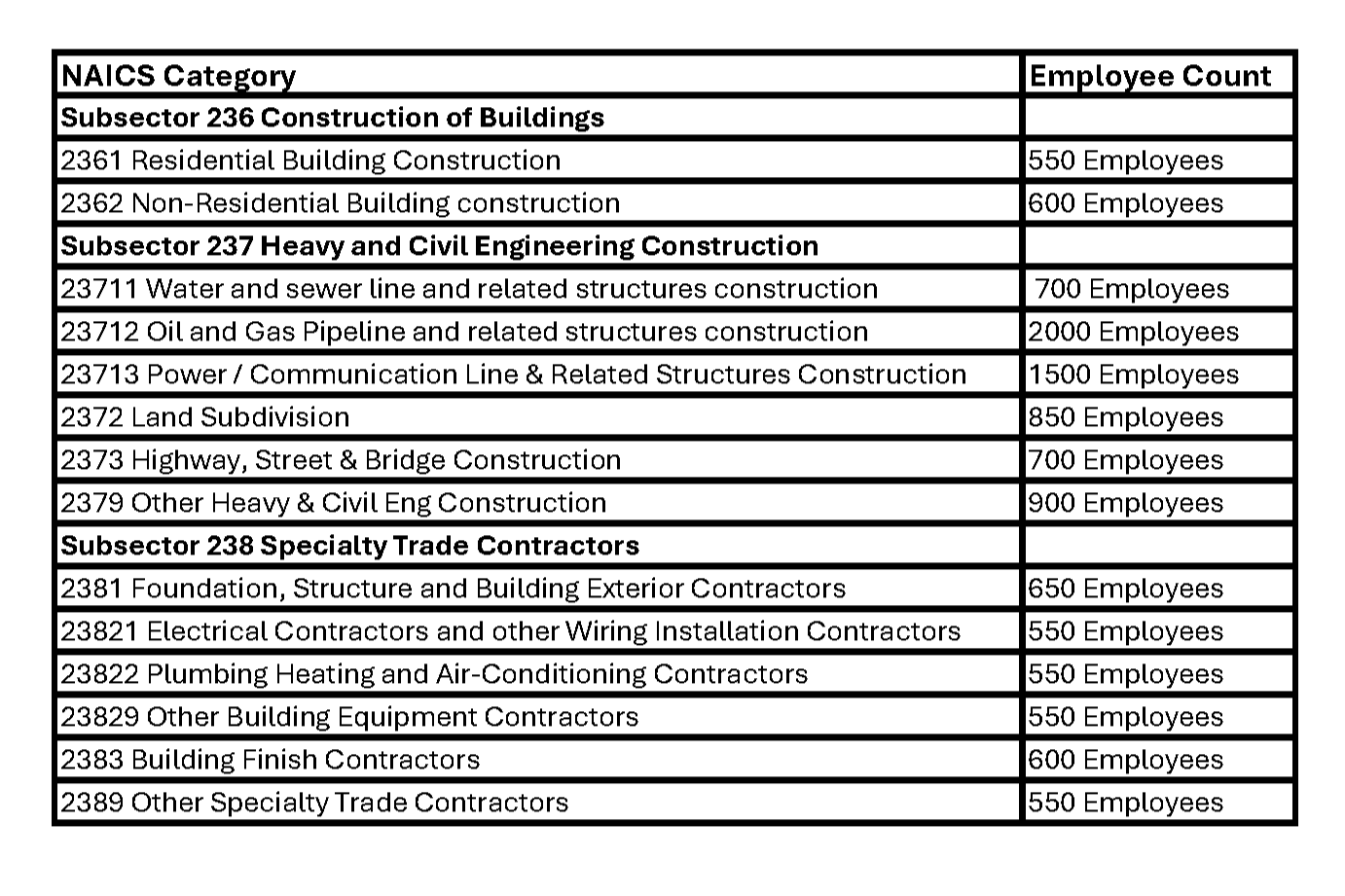
I want to offer a quick summary of the construction industry changes (NAICS 230000 numbers). The construction industry size standard will move from the current gross receipts monetary classification to an employee count classification. Here is a quick look at the new 2300 codes with standards for a small construction business under the new rules:
The Increase Will Make It Harder for Small Businesses.
Essentially, midsized and even dominant businesses would be absorbed into the small‑business pool. The SBA’s statutory mandate requires that a small business concern be one that is “not dominant in its field of operations.” After working closely in this industry for nearly 20 years, I can assure you that the employee counts referenced above represent firms that are, in fact, dominant in this marketplace. The competitive advantage held by a 600‑employee company compared to a 50‑employee company is substantial.
If you don’t do government contracting – this should still matter to you as a small business. Some experts have cited that access to SBA loans could be affected. This could make you look less bankable than a business with a huge balance sheet and resources. The positive comments of these changes actually come from the banking industry.
AWC is opposed to this change in size standards. AWC has reached out to federal legislators on this issue. We will be submitting public comments on the proposed rule. The deadline for comment is September 21, 2026. I ENCOURAGE YOU to do the same at the comment page for the new size standards rule. There isn’t a recommended comment process, and you don’t have to be an expert in all the nuances of the changes. Just go to the form and explain how this change will impact you. Talk about the size of your business and your competition that will now be considered small. You can literally just tell your story in a paragraph, but the comment itself is important.
Shout Out to Minnesota Contracting Entities
In closing, I want to recognize our Minnesota market and the creation and implementation of emerging small business programs that will help combat the changes. The methodology the MN entities have used is based on revenues over 3-5 years of a company; they have separate tiers for prime contractors and subcontractors; and they use a data driven approach to their respective agencies contracting pools. Currently Central CERT designates certified businesses as Emerging Small Business Entities ESBE, and Metropolitan Airports Commission has an emerging small business program. In development are programs at MnDOT, MetCouncil, and the State of Minnesota. AWC is in regular conversations with these entities as a group sharing best practices to support and protect small businesses that align with the marketplace and our capacity.
—B